
You work hard during the week! Maybe you need a nice relaxation spot to spend your weekends or holidays. Maybe retirement is just over the horizon and you want to start enjoying the perks of owning a second home. Maybe you’ve already retired and are looking for an oasis to visit often. Whatever the case, a second home may be within your reach!
Many of us dream of a beachfront home. California, with its perfect weather, endless activities, and unbelievable seafood, is a frontrunner. Popular So Cal spots include La Jolla, Encinitas, Redondo Beach, and Dana Point. Second homes, however, don’t have to be near a beach. Imagine vacationing in historic areas such as Riverside, Avalon, and Julian. Whatever the case, many choose to live in So Cal full time because of the quality of life, weather, things to do, and is a dream for so many of us.
I hear all types of questions when it comes to owning a second home. Common questions include:
- What is the minimum down payment on a second home?
- Can I buy a second home that will eventually be my retirement home?
- Is flood insurance required?
- What are the second home mortgage options?
Okay, let’s break this down.
1.) What is the Down Payment Requirement on a Second Home Purchase?
Many people believe that buying a second home (or even a primary home) requires 20% down. Although buying a principal residence has more low to no down payment options such as VA, FHA, and USDA, lower down payments for second homes are still available if you know where to look.
For example, as little as 10% of the purchase price could be allowed as a down payment. An additional way of keeping the out of pocket funds low would be to include seller paid costs for the buyer. When buying a second home and financing between 75.01% – 90% of the price, the seller is allowed to pay 6% of the sales towards the buyer’s closing costs and pre-paids. If the loan amount is 75% or less of the price, then the seller may pay 9% toward costs.
Low down payment requirements make owning a second home more obtainable, and luckily, there are plenty of sources. Down payment sources (for funds to close) include bank accounts, retirement account withdrawal, retirement account loan, investment accounts, home equity loan/line on the primary, sale of another home or asset, and gift funds (after the minimum requirements are met).
Discuss these possible sources with your mortgage loan officer to find out if there are any other requirements and to discuss whether one option may have advantages over another for your situation.
2.) Can I Buy a Second Home That Will Eventually Be My Retirement Home?
This is an excellent question, and a very popular request these days. Enjoying a home while you can, before possibly moving into the home permanently may be ideal. Occasionally, the question, “Is it okay to buy a property as a second home and then convert it to a primary residence down the road?” The answer is, yes! That is perfectly fine, as long as the intention was to buy as secondary, it was used as secondary, and eventually converted to primary down the road.
As long as you can afford the two homes, this would be a great way to prepare for the enjoyment of a vacation property, learn about the area, maybe vacation there, and then eventually use it a lot!
3.) Is Flood Insurance Required?
A lot of times, buying a second home means living close to a body of water, whether it be a lake, pond, waterway, or ocean. If this is the case, the structure may be in a flood hazard area, and flood insurance is required. If you are considering a home with flood insurance, ask the seller for a copy of existing flood policy, elevation certificate, and survey. These help the buyer’s lender and insurance company determine whether or not the property requires flood insurance.
If flood insurance is required, these could help get the quote, and prove that the home is not in the flood hazard area. If flood insurance is not required, it may still be a good idea to obtain flood insurance, and because the structure is not in a hazard area, the flood insurance premium would be much cheaper. As always, consult with a knowledgeable agent about your best options.
4.) What Are My Second Home Mortgage Options?
This is an excellent question, and a very popular request these days. Enjoying a home While government loans such as FHA, VA, and USDA may be for primary residences, Fannie Mae and Freddie Mac conventional loans, as well as jumbo loans allow for second home financing. Plus, there are advantages to using conventional loans, such as flexible guidelines with student loan debt, low mortgage insurance rates for high scores, up to 50% debt ratio, condo financing, and second home renovation loans. Conventional loans are limited to the county conforming loan limits, but that’s where a jumbo loan comes in handy. Jumbo loans provide financing for luxury homes exceeding these limits.
If you’re looking to find your dream vacation getaway, retirement oasis, or just a second home, contact me and I can help you with the process!










 Photo Credit: Evolve Vacation Rental Network
 With its rugged coastline and panoramic views, this area is popular with surfers, ocean-gazers, and folks who like to cruise Sunset Cliffs Boulevard, which runs the length of the cliffs. The drive along Sunset Cliffs Boulevard, which begins at Adair Street and continues south to Ladera Street, offers breathtaking views and the most amazing sunsets that you will ever see.
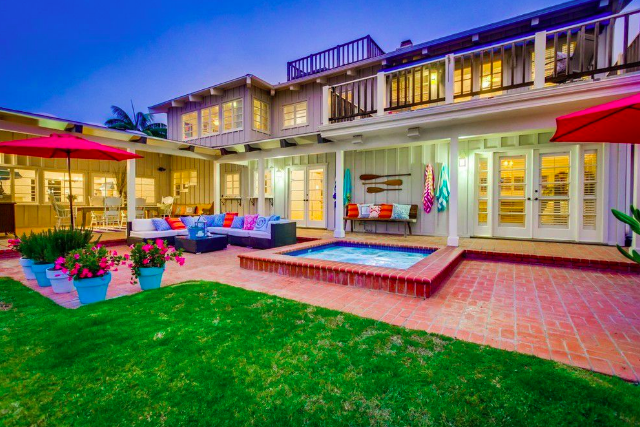 Instant Equity for the ONLY property along Sunset Cliffs with a PRIVATE outdoor living space capturing views to the Coronado Islands. Recently appraised for $3.2M! This 5BR/5BA ranch-style home, overlooking Sunset Cliffs Natural Park & iconic surf breaks, has panoramic, up-close, ocean views from every room.
 DESCRIPTION:
 Purchase, refinance, renovation, reverse, Downpayment assistance, VA, FHA